Notion Tips
Notion Templates
Quickly Build a Portfolio Website Using Notion: No Coding Needed
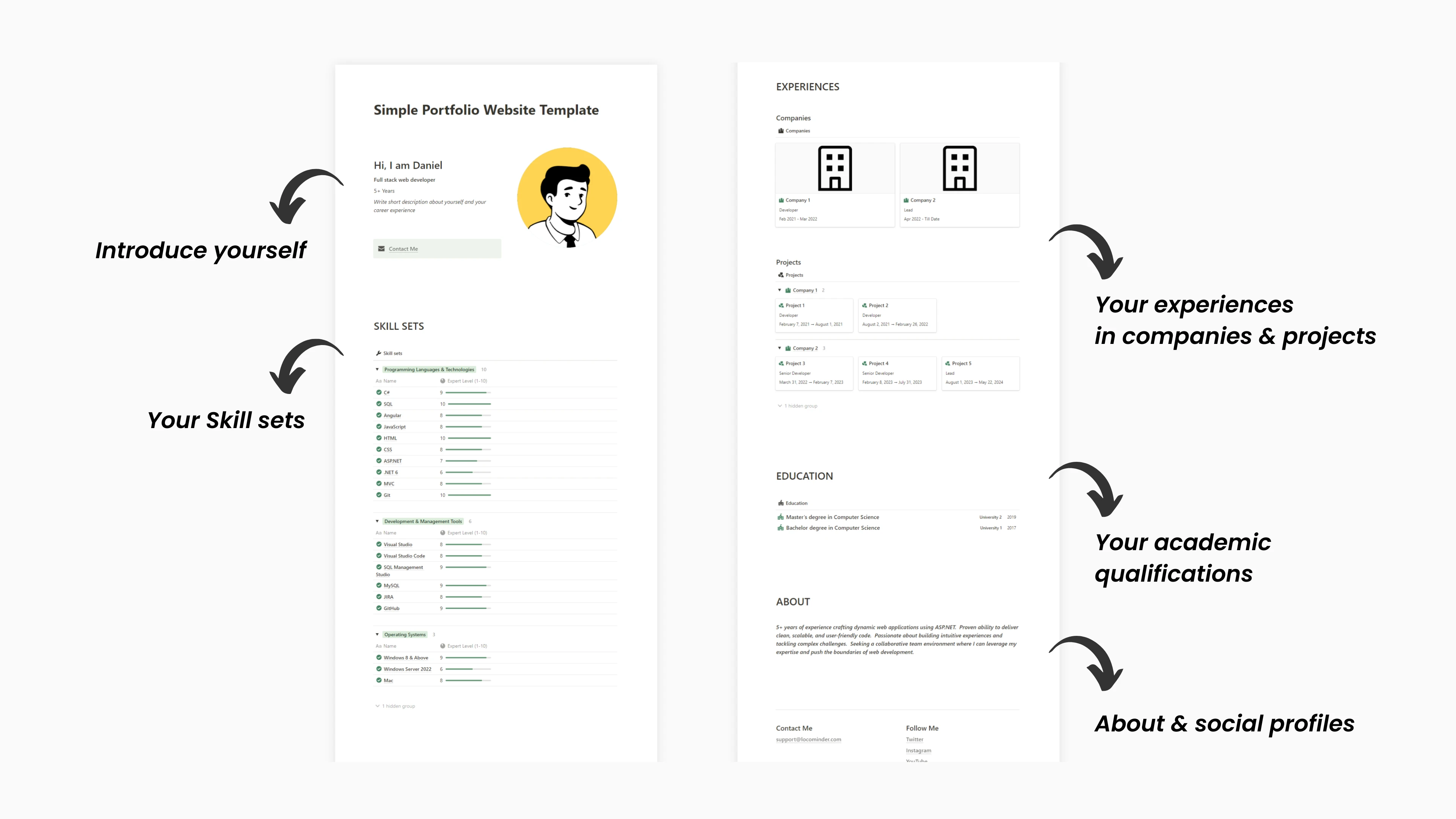
Creating a portfolio website can be a great way to showcase your work, skills, experience, and projects. Whether you're a freelancer, student, creator, entrepreneur, or professional, a portfolio gives potential clients or employers a place to learn more about you.
But building a website from scratch can feel complicated, especially if you don't know how to code.
Notion makes it possible to create and publish a simple portfolio website without coding. You can design your portfolio directly in Notion, publish it to the web, and customize several website settings.
In this guide, I'll show you how to create a portfolio website with Notion, publish it, and configure the most useful website settings.
How to Create a Portfolio Website in Notion
Notion is primarily known as a productivity and workspace tool, but you can also use a Notion page as a simple website.
For a portfolio, you can use a Notion page to showcase:
About you
Skills and experience
Projects
Work samples
Education
Contact information
Social media links
The easiest way to get started is with a portfolio template.
Use a Free Notion Portfolio Template
Instead of building your portfolio from scratch, you can start with my [Free Notion Portfolio Website Template].
Simply duplicate the template into your Notion workspace and replace the sample content with your own information.
If you're looking for other website-related templates, you can also explore my [Best Notion Website Templates] collection, which includes free templates for portfolios, link-in-bio pages, and website management.
Step 1: Create Your Portfolio Page in Notion
If you're building your portfolio from scratch, create a new page in your Notion workspace.
Add the information you want visitors to see.
A simple portfolio structure could be:
About Me
Introduce yourself and briefly explain what you do.
Skills
List your most relevant skills and areas of expertise.
Experience
Add your previous roles, projects, or professional experience.
Projects
Showcase your best work with descriptions, images, or links.
Contact
Add your email address and relevant social media or professional profiles.
Tip: Don't try to add everything you've ever done. Focus on the work and information that best represents what you currently do.
Step 2: Publish Your Notion Portfolio Website
Once your portfolio page is ready, you can publish it to the web.
Open your Notion portfolio page and:
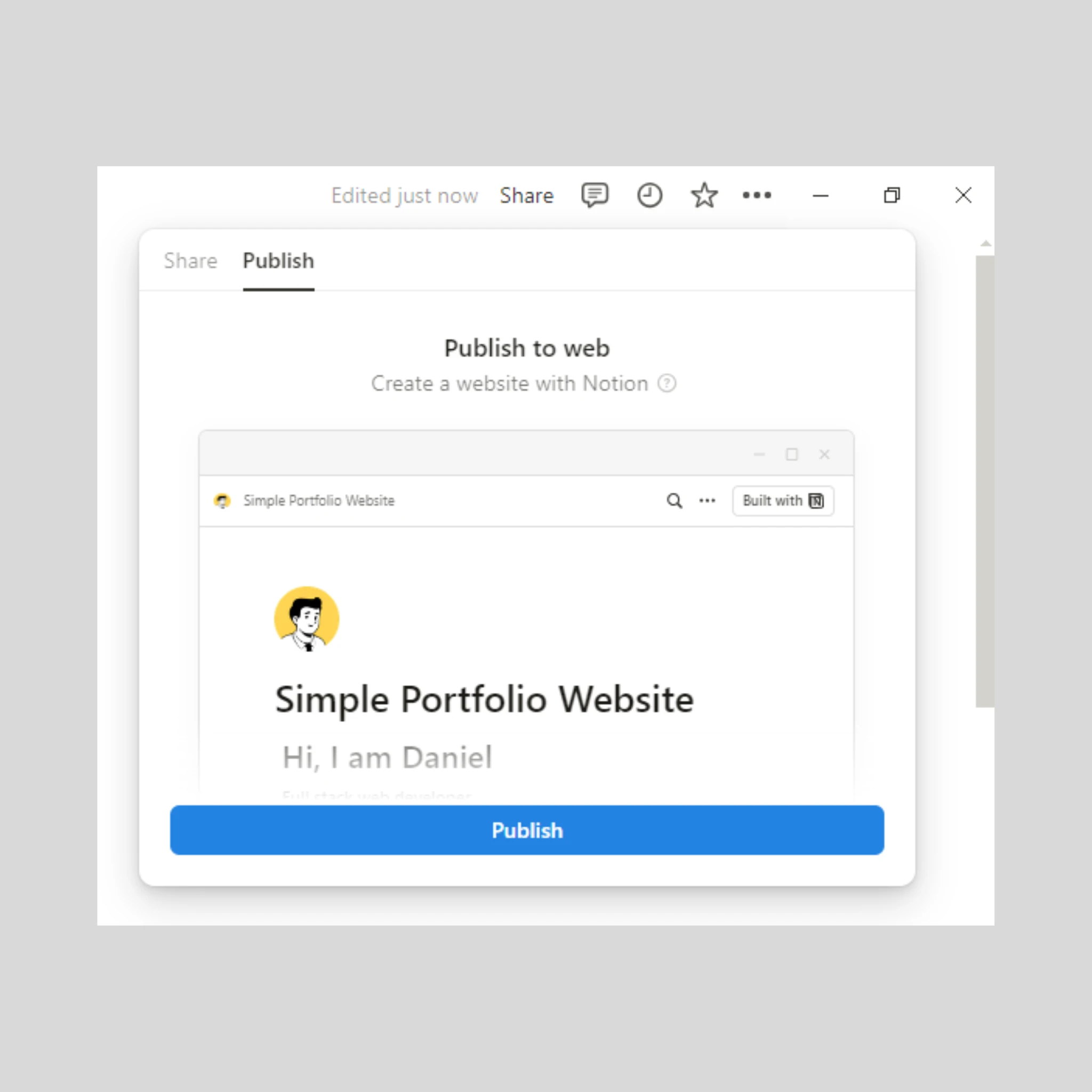
Click Share in the top-right corner.
Open the Publish tab.
Select Publish.
Copy the published website link.
Your portfolio will now be accessible through a public Notion URL.
You can share this link on your social profiles, resume, email signature, or anywhere else you want people to find your portfolio.
Notion Website Settings You Should Know
After publishing your page, Notion provides several settings that let you control how your website appears and behaves.
Let's look at the most useful ones.
General Site Settings
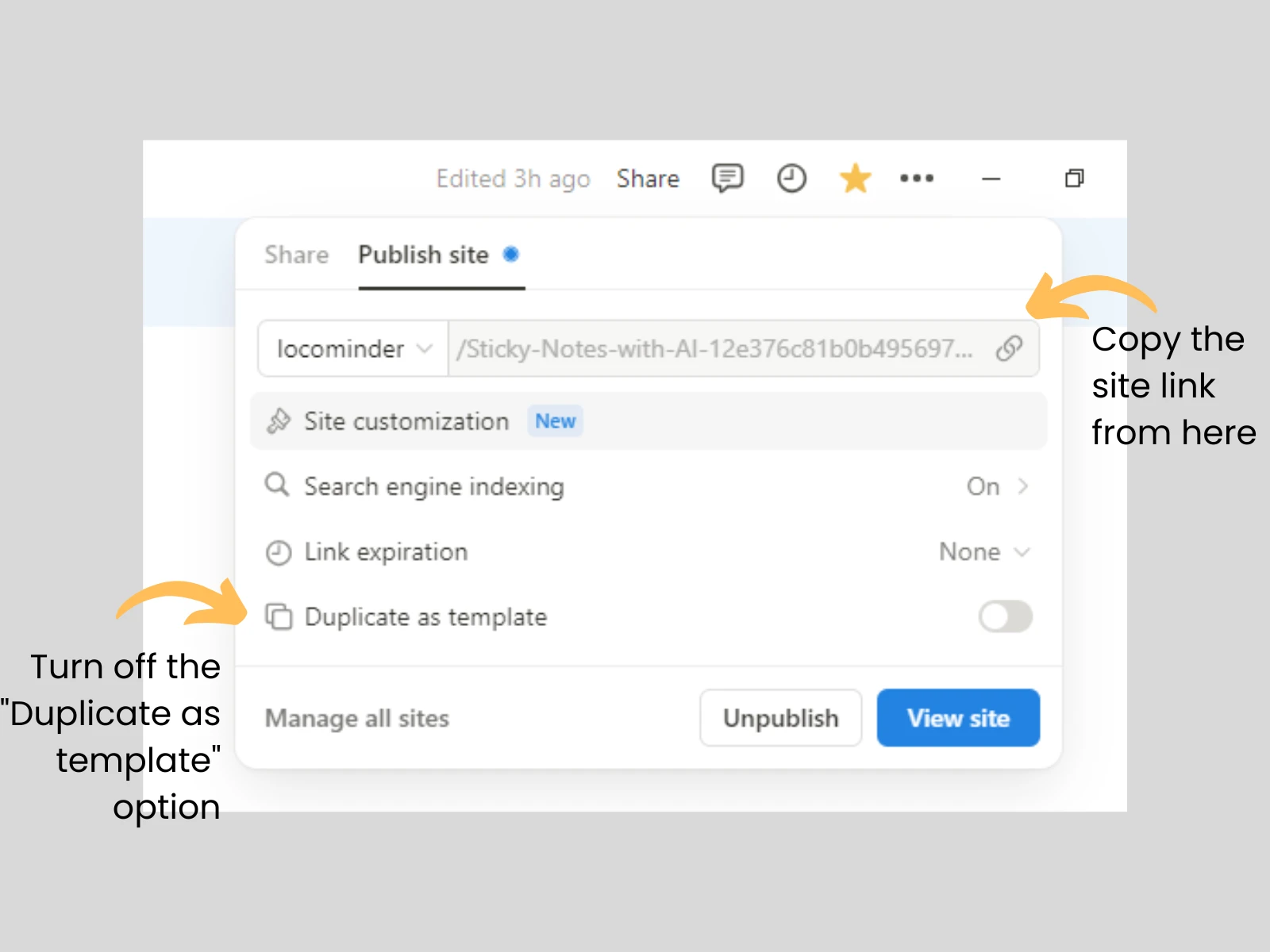
Search Engine Indexing
The Search engine indexing option controls whether search engines can index your published Notion page.
If you want your portfolio to have a chance of appearing in Google search results, enable search engine indexing.
However, indexing doesn't guarantee that your page will rank in search results. Your content, relevance, competition, and other SEO factors still matter.
Duplicate as Template
The Duplicate as template setting determines whether visitors can duplicate your published Notion page into their own workspace.
For a personal portfolio website, you will generally want to turn this off.
If you're intentionally sharing a Notion page as a template, you can leave it enabled.
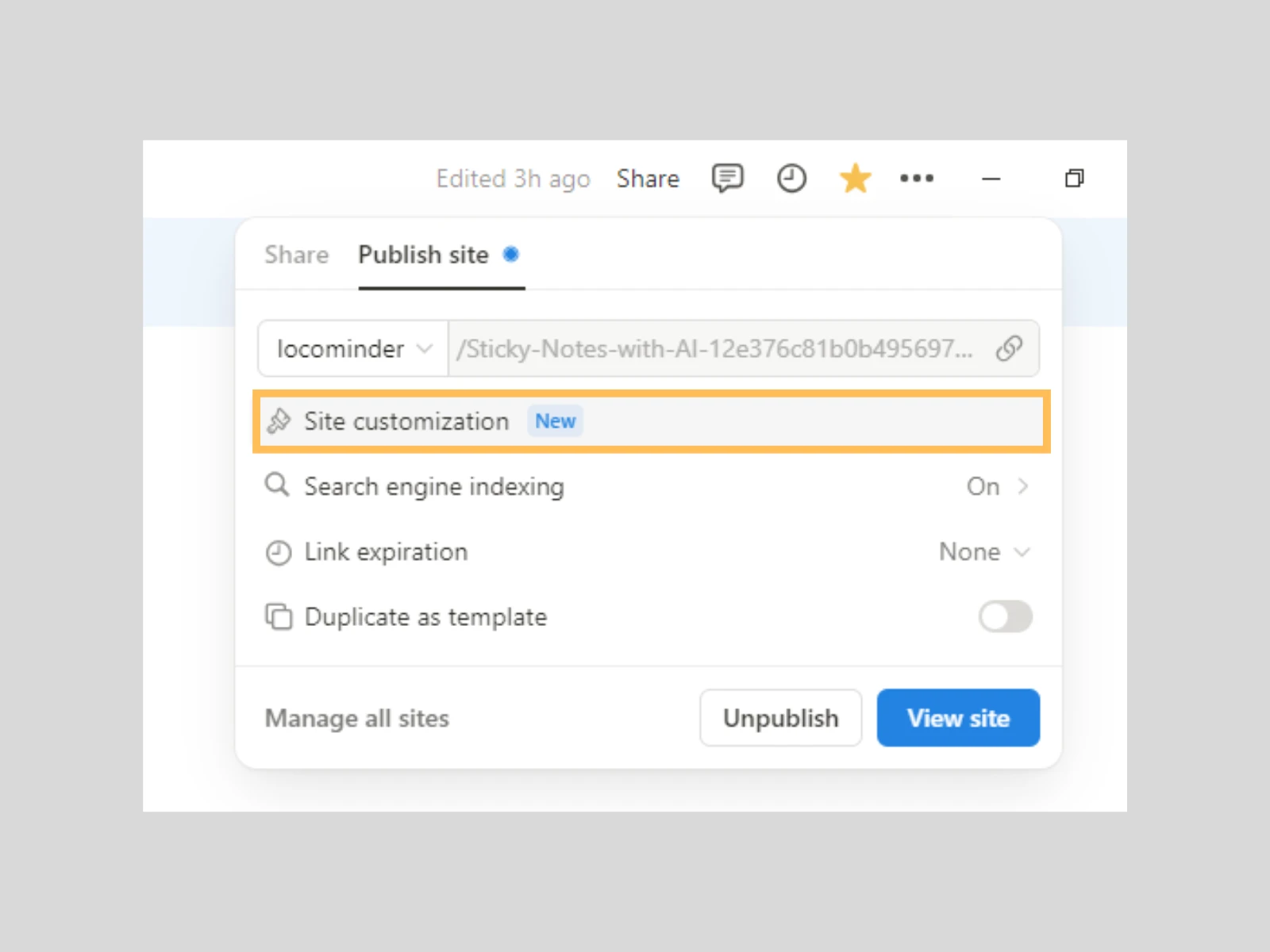
Customize Your Notion Website
Notion also provides several customization options for published websites.
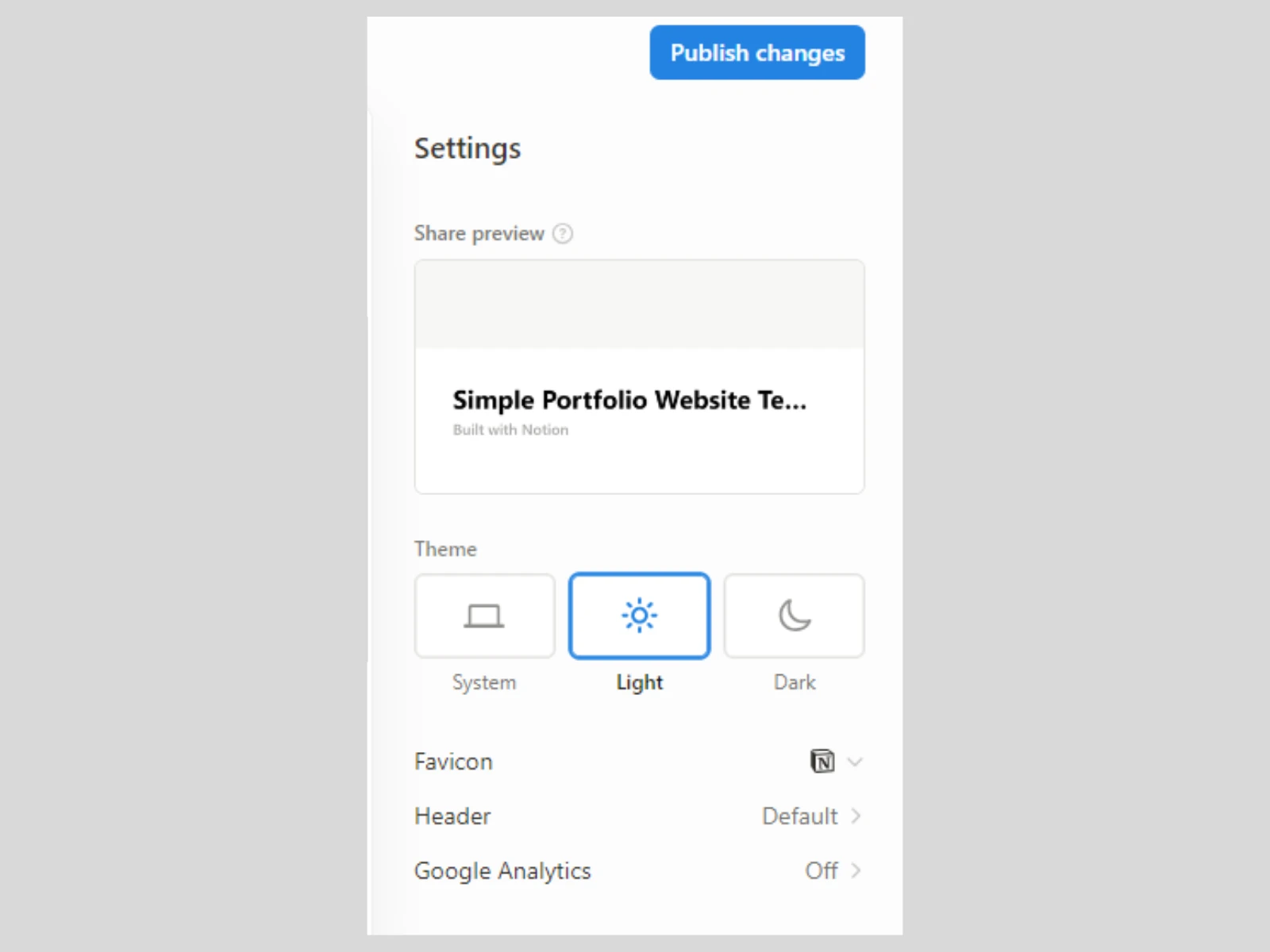
Share Preview
The Share Preview setting lets you customize the image that appears when your website link is shared on platforms that support link previews.
Use an image that represents your portfolio or personal brand.
Theme
You can choose how your published website looks:
Light
Dark
Follow device settings
Choose the option that works best with your portfolio design.
Favicon
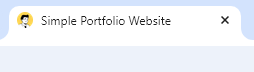
A favicon is the small icon displayed in a browser tab.
Adding a recognizable favicon can make your portfolio feel more polished and easier to identify.
Google Analytics
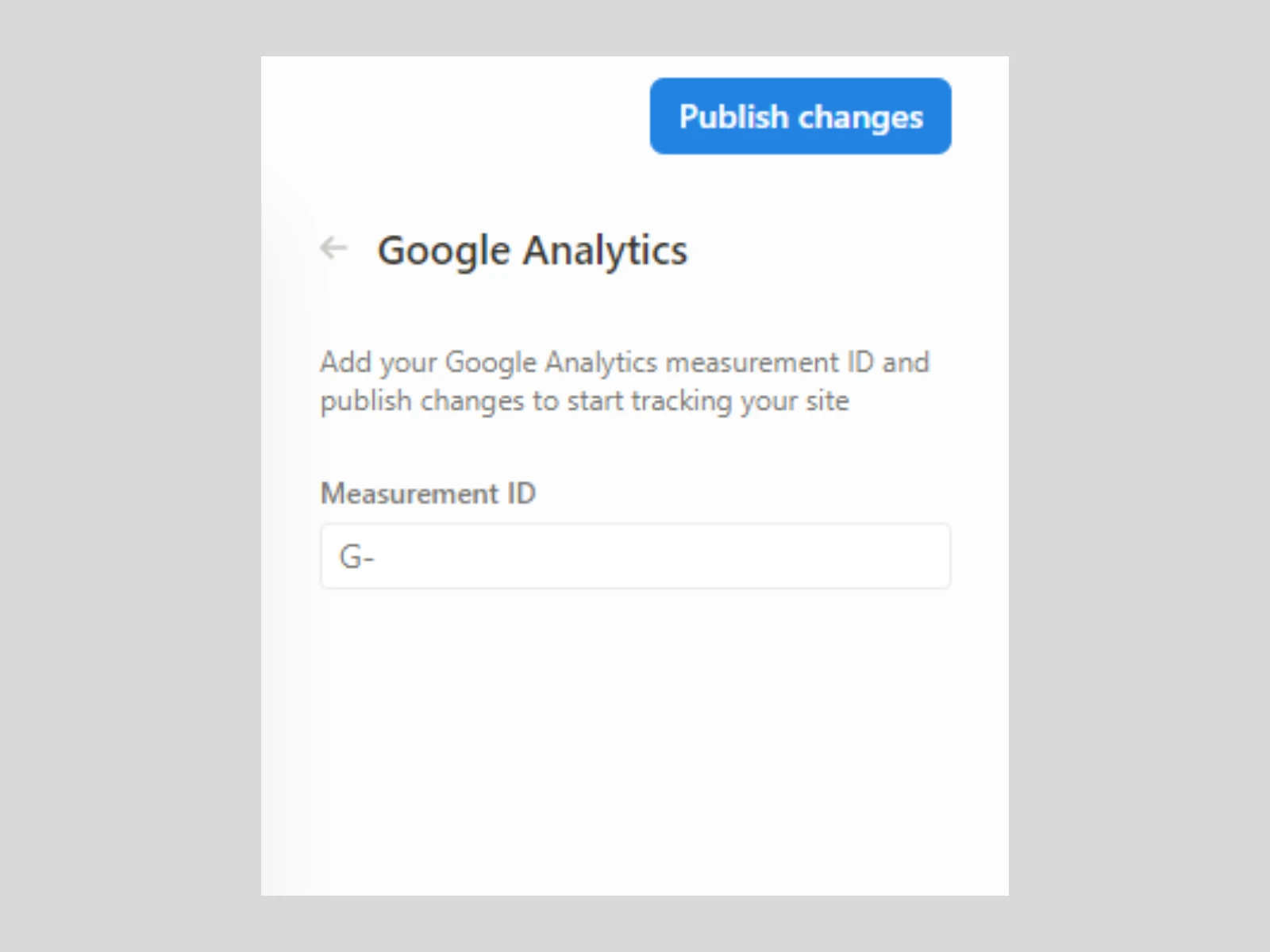
If you want to understand how people interact with your website, you can connect Google Analytics using the available Google Analytics setting.
This can help you understand things such as website traffic and visitor activity.
Customize the Website Header
Notion also provides several options for the website header.
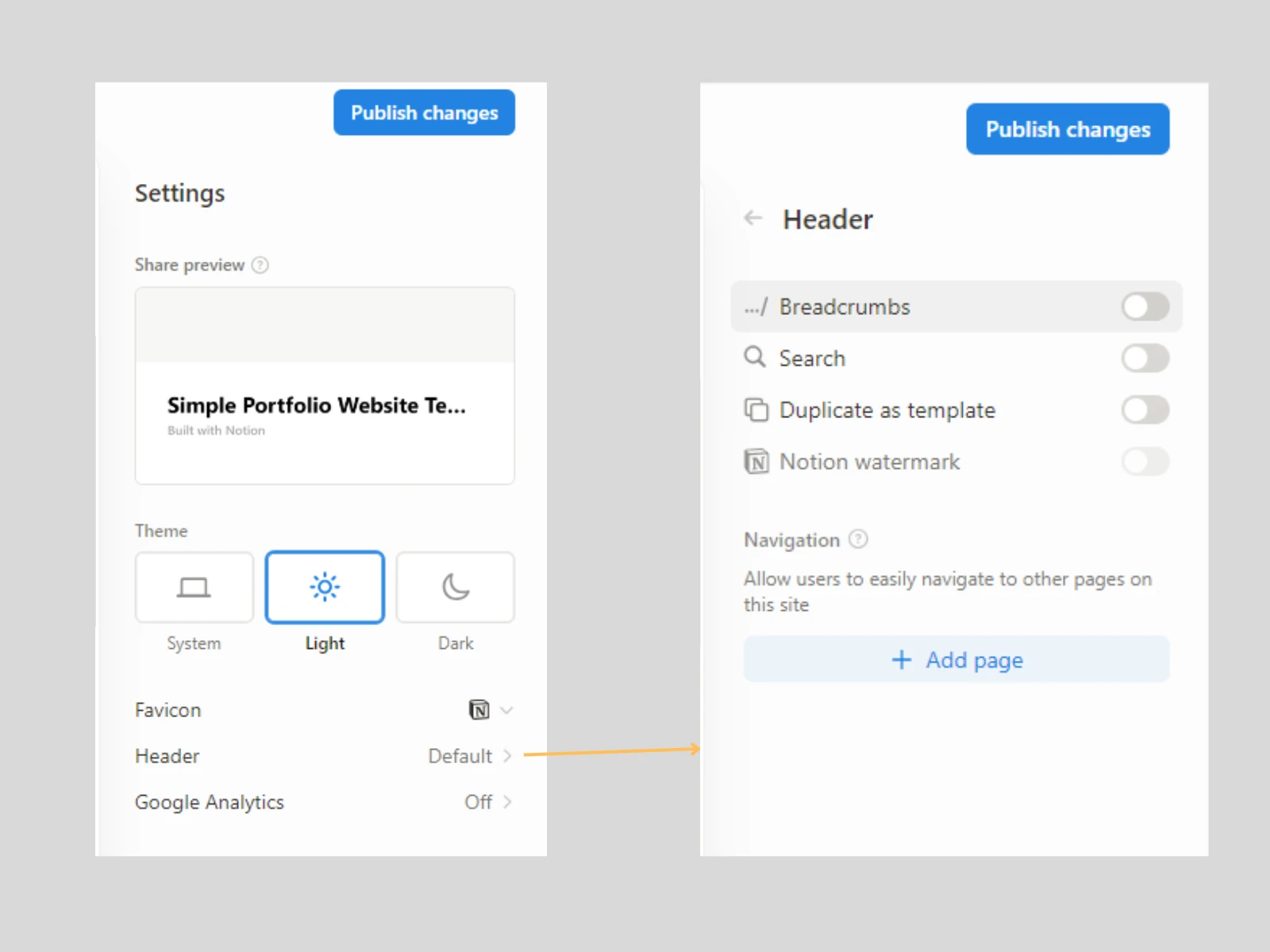
Breadcrumbs
Breadcrumbs can help visitors understand where they are within your site's page structure.
For a simple one-page portfolio, you may not need them. They can be more useful if your portfolio contains multiple pages.
Search
You can enable Search to allow visitors to search your published Notion website.
For a small portfolio with only a few sections, this may not be necessary. For larger Notion websites, it can make finding information easier.
Navigation
The Navigation option allows you to add pages to your website's navigation menu.
This can be useful if your website contains multiple sections or pages, such as:
About
Projects
Blog
Services
Contact
For a simple one-page portfolio, you can keep the navigation minimal.
Notion Watermark
Depending on your Notion website setup and plan, you may have an option related to the Notion watermark.
If you're using a custom domain and your plan supports removing the watermark, you can configure this from the relevant website settings.
Can You Use a Custom Domain With a Notion Website?
Yes, you can use a custom domain with a Notion website depending on your Notion plan and setup.
For example, instead of a Notion URL, you could use a domain such as:
yourname.com
If you're interested in using a custom domain, see the guide on [how to connect a custom domain to a Notion website].
Want to make your Notion portfolio more professional?
Notion lets you publish a portfolio for free, but paid plans unlock additional Site customization and the ability to connect a custom domain with an additional domain add-on.
If you're planning to use Notion seriously for your portfolio or business, you can try the paid features first:
→ Try Notion Business + AI free for 3 months
Tips for Creating a Better Notion Portfolio Website
Publishing your portfolio is only the first step. A few simple improvements can make it more useful to visitors.
1. Keep the design simple
You don't need dozens of sections, colors, or visual elements.
Make it easy for someone to understand who you are and what you do.
2. Show your best work
Don't include every project you've worked on.
Choose a few strong examples and explain what you did and what the project achieved.
3. Make your contact information easy to find
If someone wants to hire you or collaborate with you, they shouldn't have to search for your email address.
4. Keep your portfolio updated
Your portfolio should reflect what you're currently doing.
Review your projects, experience, links, and contact information periodically.
Final Thoughts
Creating a portfolio website doesn't have to involve coding or complicated website builders.
With Notion, you can create a simple portfolio, publish it online, and customize several website settings from the same workspace.
If you want to get started quickly, use my [Free Notion Portfolio Website Template] and customize it with your own information.
And if you're looking for more free website templates, check out [Best Notion Website Templates] for additional options, including a Link in Bio template and a Website Management template.